Important: Avoid using petroleum-based cleaners or undiluted bleach, as these can cause significant damage to the internal seals and components of your FlowZone® unit.Safety First: Preparing For Maintenance
Before you begin the cleaning process, safety should be your primary concern. Unlike a power washer or a paint gun, which operate under different mechanical principles, a FlowZone® sprayer utilizes a sophisticated battery-powered pump system that requires specific handling.
Remove the Battery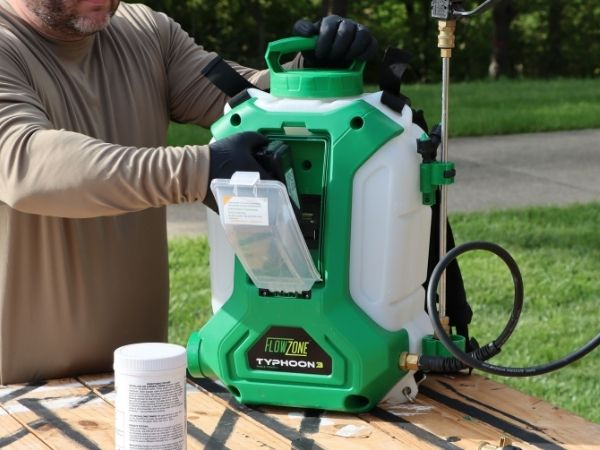
Always remove the lithium-ion battery before performing any maintenance. This prevents accidental activation and protects the electrical components.
Dispose of Chemicals Safely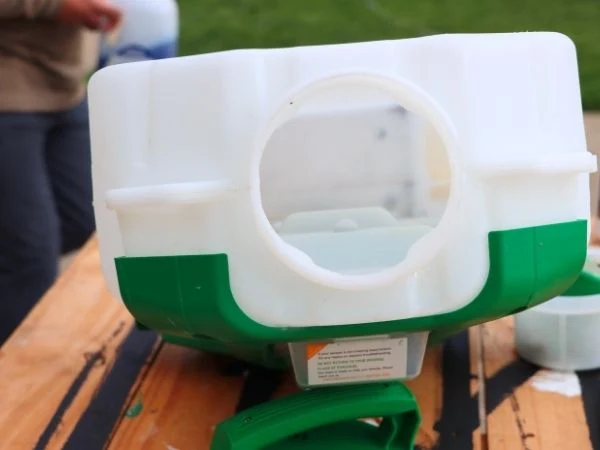
Any remaining chemical should be drained and disposed of according to the manufacturer’s instructions and local environmental regulations. According to the Environmental Protection Agency (EPA), improper disposal can lead to environmental contamination and health risks.
Wear Protective Gear
Even when cleaning, you may come into contact with chemical residues. Wear the appropriate gloves and eye protection as recommended by the chemical labels you have been using.
Method 1: Flush With Soap And Water
For most daily applications, a simple soap and water flush is highly effective. This method is gentle on the internal seals and helps break down most water-soluble chemicals.
Step 1: Initial Fill-up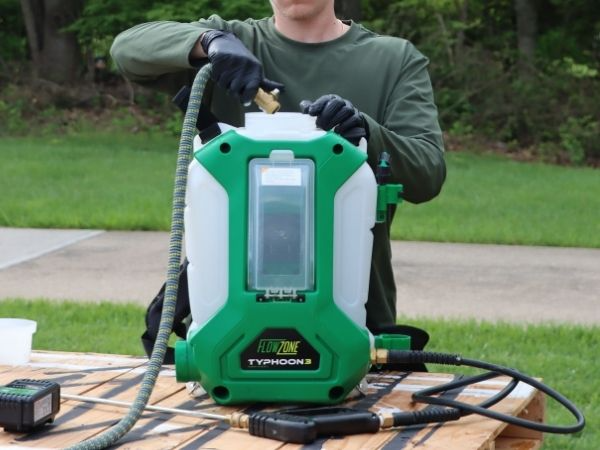
Fill the tank with fresh water. Warm water is particularly effective at dissolving residues that may have begun to settle.
Step 2: Add The Soap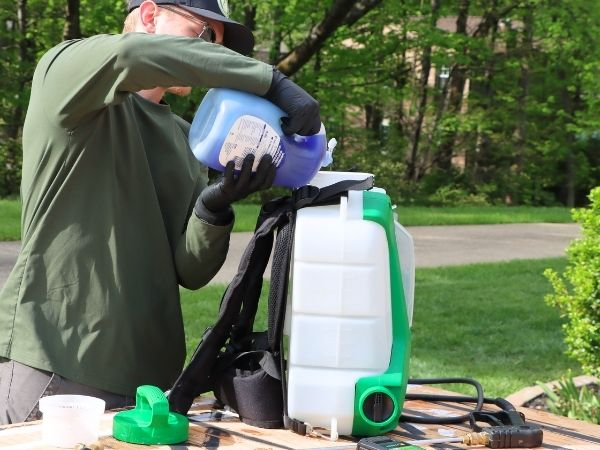
Add a small amount of mild dish soap to the tank.
Step 3: Agitate The Solution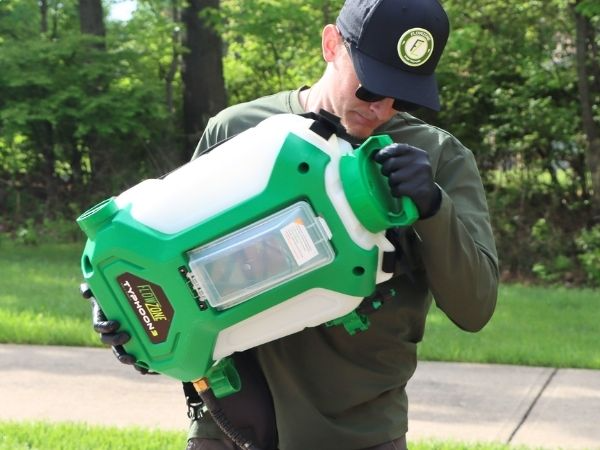
Fill the tank further with water and agitate the mixture. You can do this by gently shaking the tank or by using the spray wand to circulate the soapy water back into the tank itself.
Step 4: Flush The System
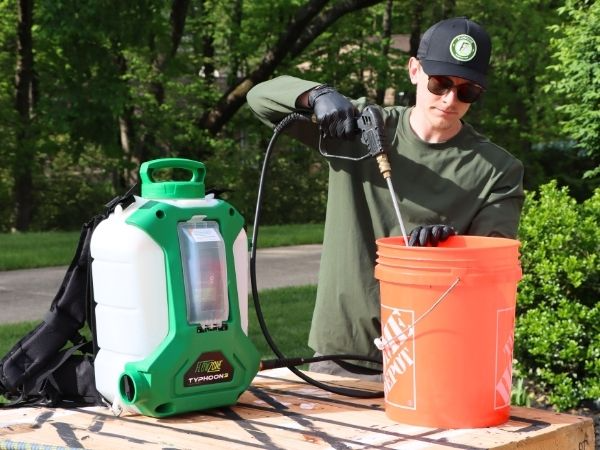
Place a charged battery pack back into the sprayer and turn the unit on. Spray the soapy solution through the wand and handle assembly for 3-5 minutes or until the tank is empty. This will ensure the pump, hose, and nozzle are thoroughly cleaned.
Step 5: A Final Rinse
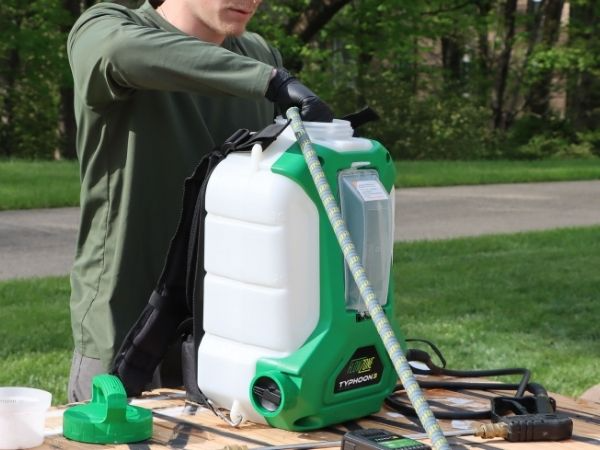
Empty any remaining soapy mixture from the tank and refill the sprayer with clean water. Flush the system again until no more soap remains in the tank.
Method 2: Using A Dedicated Spray Tank Cleaner
For tougher jobs or when switching between vastly different chemicals, such as moving from a herbicide to a fertilizer, a dedicated spray tank cleaner is recommended.
Step 1: Mix The Cleaning Solution
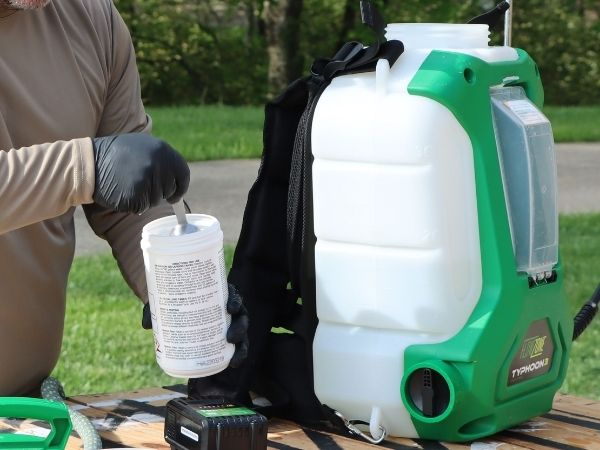
Follow the manufacturer’s label to mix the tank cleaner with the appropriate amount of water directly in the sprayer tank.
Step 2: Agitate And Circulate The Solution
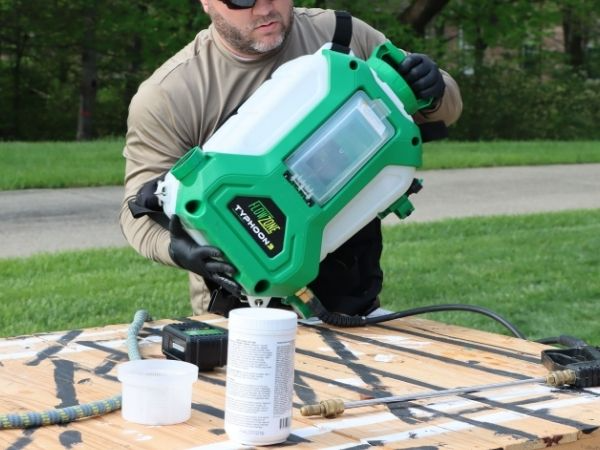
Ensure the solution is thoroughly mixed by agitating it in tank.
Step 3: Complete Flush
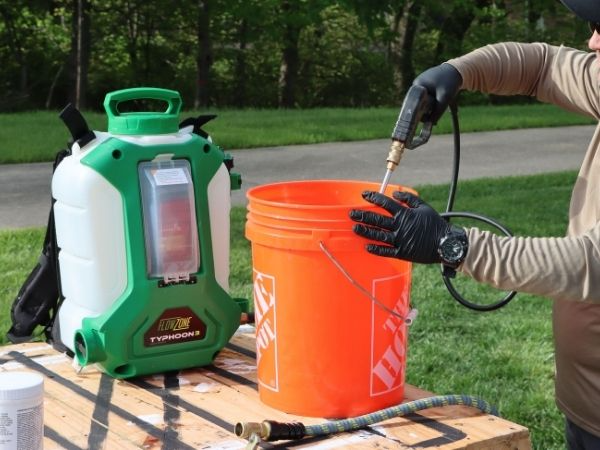
Place a battery in the holster and power on your FlowZone® sprayer. Run the solution through the entire system until the tank is empty.
Preparing Your Sprayer For Storage
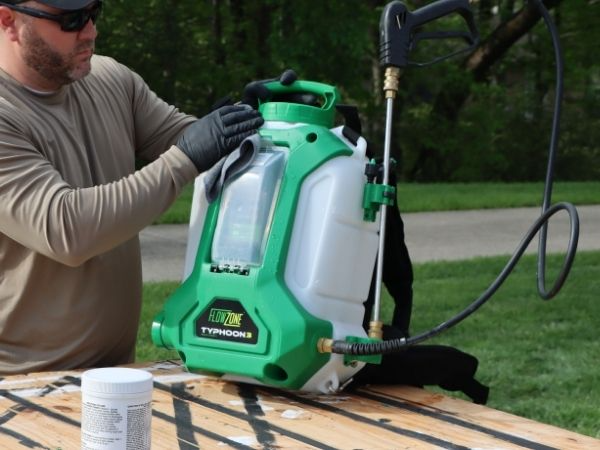
Once your sprayer is clean, proper storage is the final step in your maintenance routine. Use a clean cloth to dry the exterior of the sprayer, paying close attention to the battery compartment.
Always store your FlowZone® sprayer in a covered, dry area. Extreme temperatures, whether intense heat or freezing frost, can negatively impact the integrity of the tank and the performance of the pump. By keeping your equipment in a controlled environment, you ensure it is ready to perform the moment you need it.
Was this article helpful?
That’s Great!
Thank you for your feedback
Sorry! We couldn't be helpful
Thank you for your feedback
Feedback sent
We appreciate your effort and will try to fix the article